Now accepting new clients. Office located in Hartford, CT. — In-person & Virtual.
Thoughtful, In-person psychotherapy for individuals and couples who want to understand themselves more fully and live with greater clarity, intention, and purpose.
Clinical psychology
Research background
Former Director of Counseling Center, 8 years.
✓ In-Person & Virtual Available
✓ In-Person & Virtual Available
✓ HIPAA Compliant & Confidential
✓ Private Pay
✓ Superbills Provided
✓ Evening Appointments Available
In a mental health landscape increasingly dominated by telehealth platforms, large group practices, and session limits, Prospect Psychotherapy is intentionally different. Dr. Burda is a solo practitioner who prefers meeting in person, who draws from psychodynamic, existential, and humanistic models and who has lived long enough to have something to offer, but knows he still has much to learn.
You don’t get matched with a therapist. You get one person, one relationship, developed over time. That isthe most powerful thing therapy can offer.
I’m a licensed clinical psychologist with over 25 years of experience working with adults and couples. My approach is informed by depth psychology, Jungian and existential traditions, Buddhist philosophy, and a belief in the inner resources we all carry.
I didn’t take the straightest path here. I started in neuroscience, moved into genetics research at Yale University’s Department of Psychiatry, and eventually found my way to clinical psychology — through my own life, my own questions, and a growing need to understand why people are the way they are.
Beyond the office, I play guitar, make visual art, and write. These activities shape how I listen, think, and feel.
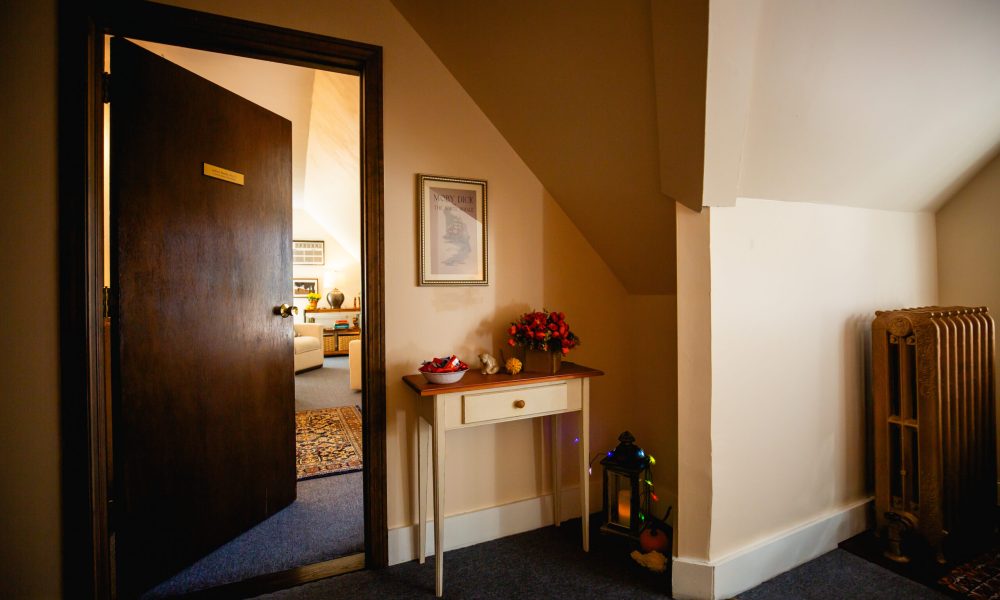
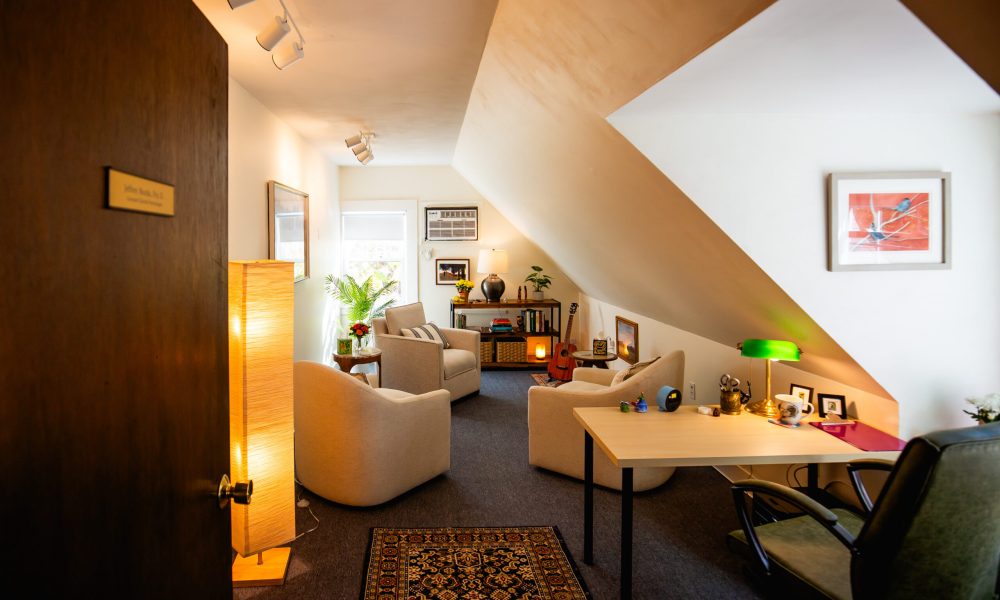
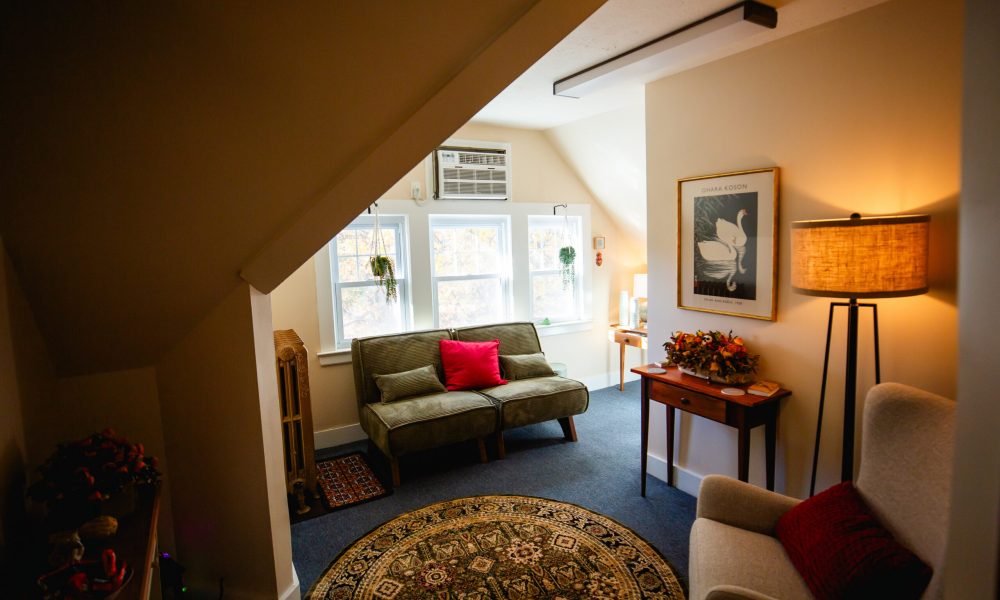
I offer individual and couples therapy — in person at myHartford office,
or virtually via secure video. Sessions run for 55 minutes. Frequency is determined
together based on what’s right for you and the work.
Over 25 years of clinical work has shaped a practice that meets people where they are — not wherethey, or others, think they should be. These are the areas I work in most deeply.
Navigating change, loss, identity, purpose, and what comes next.
Exploring and redefining your relationship with alcohol, cannabis, pornography, and more.
Anxiety, relationships, identity, school, and figuring out who you are.
“Symptomsare not asking to be fixed. They are asking us to pay attention to something deeper.”
We go below the surface : to patterns, dreams, the body’s wisdom, and the parts of ourselves we haven’t learned to hear yet.
Drawing from Jungian, existential, humanistic, and Buddhist frameworks. The whole person — not just the presenting symptom.
A no-pressure phone conversation to see if we seem like a good fit. No commitment required. Most people find this makes the decision considerably easier.


We meetin person and begin.You start with whatever feels important. You’re also deciding ifthis is right for you, and that matters to me.
We find a rhythm that works — oftentimes weekly to start, adjusted as needed. Therapy here isn’t a fixed program. We work until the work feels done.
“Dr. Burda is one of the rare therapists who actually listens — not for what to say next, but because he’s genuinely curious about you. I’ve been in therapy before. This is different.”
— ATTORNEY · WEST HARTFORD · INDIVIDUAL THERAPY
“Dr. Burda is one of the rare therapists who actually listens — not for what to say next, but because he’s genuinely curious about you. I’ve been in therapy before. This is different.”
— ATTORNEY · WEST HARTFORD · INDIVIDUAL THERAPY
“Dr. Burda is one of the rare therapists who actually listens — not for what to say next, but because he’s genuinely curious about you. I’ve been in therapy before. This is different.”
— ATTORNEY · WEST HARTFORD · INDIVIDUAL THERAPY
There are many ways in which therapy can be helpful. One perhaps basic, yet often impactful part of therapy is having a confidential space where you can talk about whatever you would like, and “be” however you need to be – whether you’re feeling angry, sad, confused, joyful, scared, worried, hopeless, or any other way. “Come as you are,” I like to say.
In addition, there is often a benefit to “shining a light” on some of those dark corners of our psyches (we all have “blind spots” …even therapists)and exploring parts of ourselves and our experiences we’d rather avoid. Having a therapist to help guide the process can be very useful, as the therapist’s role is to monitor your emotional responses, propose new perspectives, ask deeper questions, andencourage you to look inward with curiosity and gentleness. This can feel scary at times because there is not a set map or blueprint for the healing process. However, a “successful” therapy always involves the client and therapist joining togetherto face theseinevitable uncertaintiesso the client may gain insight and understanding and come to terms with aspects of their lives.
Learning new skills that one could practice outside of therapy is another potential benefit. For example, handle on thoughts and feelings, working with urges to drink, deescalating conflict, talking with partner, being kind to self, managing triggers,
Prospect Psychotherapy is a private pay practice — I don’t bill insurance directly. I provide detailed superbills that you can submit to your insurer for potential out-of-network reimbursement. I’m happy to talk through the details during your free consultation.
It’s common to come to therapy for the first time in your 40s or 50s, or even later — often after a significant life event, or simply due to a growing sense that something needs to shift.You don’t need to be in crisis. Many of my clients describe therapy less as “getting help” and more as giving themselves a dedicated space to think clearly, without the noise of everything else.Thefreeconsultation is a low-stakes way to find out if it feels right.
I try to remain open and flexible to whatever emerges in each session and not direct the process with a set agenda. For example, I might invite you to “take me where youneed to go,” whether it is a recent argument with your partner, a troubling memory that you never discussed, an important insight, or a strange dream from a few nights ago. I will join with you to further exploretogetherwith curiosity. In my experience, the psyche has a way of bringingup what is most important to examine, so Ihave learned to “trust in the process” and encourage my clients to do the same. My job is wide-ranging and includes highlighting common themes that I notice, paying close attention to your emotional responses, and at times offering you my perspective or interpretation. The spirit of our sessions – at least what I hope to foster – is one of “slowing things down,” not getting to hung up on categorizing anything as “bad” or “good,” andfostering the mindset that you possess an “inner healer” that can help youto become your own therapist over time.I tend not togive “homework,” but sometimes I just might.
No. Psychologists in Connecticut cannot prescribe medications. If you are interested, I am happy to refer you to a psychiatrist. If you are already taking psychotropic medications, I may ask your permission to speak with your prescriberto coordinate care.
Sometimes, it can be hard to determine if it would be better to engage in couples or individualwork (or both!). Money and time can be limiting factors. Feel free to contact me for a free consultation. I am glad to consider your situation and offer my recommendations. Although not “set in stone,” here are a few ways I tend to practice:
In my experience, couples therapy is more effective when both persons are currently also engaged in individual therapy or have done a good amount of individual work in the past.
I am always happy to suggest books when asked and will sometimes make recommendations unprompted. I consider whichbooks and resources might best resonate with you and will hopefully help to facilitate and enhance your work in therapy.
Maybe fees?
The first step is simply a conversation. A free 20- minute phone call — no pressure, no commitment. Most people find that one conversation makes the decision considerably easier.
Fill out the form and Dr. Burda will be in touch within one business day to schedule your free 20-minute call.